5 Things Your Website Needs to Get Found by AI Search (ChatGPT, Perplexity, Google AI)
Schema markup gives a page roughly a 2.5x higher chance of being cited in AI answers from ChatGPT, Perplexity, and Google AI Overviews. Most small business websites have zero schema installed. That means most small business websites are effectively invisible to the way people search today. Here is what changed, and the five things your website needs to fix it.
Why the old SEO playbook stopped working
The old SEO was a ranking game. You picked a keyword, stuffed it into your title tag, your headings, your URL, and your content, built a few backlinks, and waited a few months for the page to climb. Then people clicked the link.
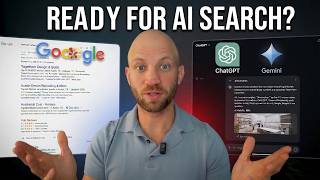
That whole model is being replaced. AI search is a citation game. Instead of ranking pages, AI engines pull together a single answer from across multiple websites and cite the sources they trust most. ChatGPT does it, Perplexity does it, and Google AI Overviews and AI Mode do exactly the same thing.
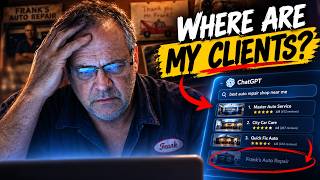
The competition is no longer for the blue links at the top. It is for being one of the three or four sites the AI quotes inside its answer. And here is the strange part: the sites being cited by AI are often not the ones ranking highest on Google. About 60% of AI Overview citations come from URLs that are not even in the top 20 Google results. Your high ranking does not buy you anything in AI search, and a page nobody could find before can suddenly become the source the AI quotes a thousand times a day.
The 5 signals AI search rewards
1. Structured data (schema markup)
Schema markup is a chunk of code that sits on your page and tells AI engines what your content is about in machine-readable terms. Without it, the AI has to guess. With it, the AI knows you are a roofing company in Phoenix with 47 reviews and a five-star average. This is the single biggest lever, and it is the one small business sites almost always lack.
2. A direct answer up top
AI search wants the answer in the first three sentences. Each section of your page should open with a clear, self-contained sentence that answers the implied question. The test is simple: if a chunk of your content can be quoted by itself and still makes sense, it gets cited.
3. Brand authority (E-E-A-T)
E-E-A-T stands for Experience, Expertise, Authoritativeness, and Trustworthiness. AI engines weigh who is saying something, not just what is said. That means real About pages, named testimonials, certifications, years in business, and genuine reviews on third-party platforms. All of it tells the AI your site is trustworthy enough to quote.
4. Natural, conversational language
AI engines dislike keyword-stuffed pages. They favor content that sounds like a real person explaining something to a friend. The same writing that converts visitors into customers also tends to get cited by the AI.
5. FAQ blocks
AI loves question-and-answer pairs because each one is a self-contained snippet. A solid FAQ section near the bottom of your service page is one of the fastest ways to start showing up in AI answers. (There is one at the bottom of this very page.)
Bonus: page speed
Make sure your site loads fast. If it takes forever, AI engines skip it and you do not get cited. A slow site also drags down your traditional Google ranking. If you are running old website technology that constantly breaks and loads slowly, you have little chance of showing up in either Google or AI answers.
Why this is worth the work
The visibility math is shifting fast. ChatGPT alone is sending more than twice as much referral traffic in 2026 as it did in 2025, and Perplexity, Claude, Gemini, and Google AI Mode are all doing the same. That traffic also converts better than regular Google traffic: ChatGPT referral traffic converts at around 7.1%, the second-highest of any source, behind only paid search. Being one of the cited sources now matters more than a top-ranked link ever did.
Adding schema, FAQ blocks, clean structure, and brand signals is real work, and most owners have no idea which piece their site is missing. Guess wrong and you can spend months fixing the wrong thing.
Find out where you stand first
Before you change anything, find out what AI is actually saying about you. I built a free tool called AI Spartan that asks the AI engines the questions your buyers are asking. It reads your website, then samples up to 70 live answers across ChatGPT, Perplexity, Google AI Mode, and AI Overviews. It shows how often you come up, which competitors get recommended instead of you, the actual answers word for word, and the three fastest fixes for your specific site. The audit is free and the report is yours to keep.
From there you have two options: take the report and fix things yourself, or have my team rebuild your site so it is ready for AI search, fast, with schema, FAQ blocks, and direct answers, plus listings on the sources AI engines pull from and a monthly report showing your AI visibility moving. We go through your report together on a free 15-minute call first, and setup fees are waived for early clients.